Where did my art go?
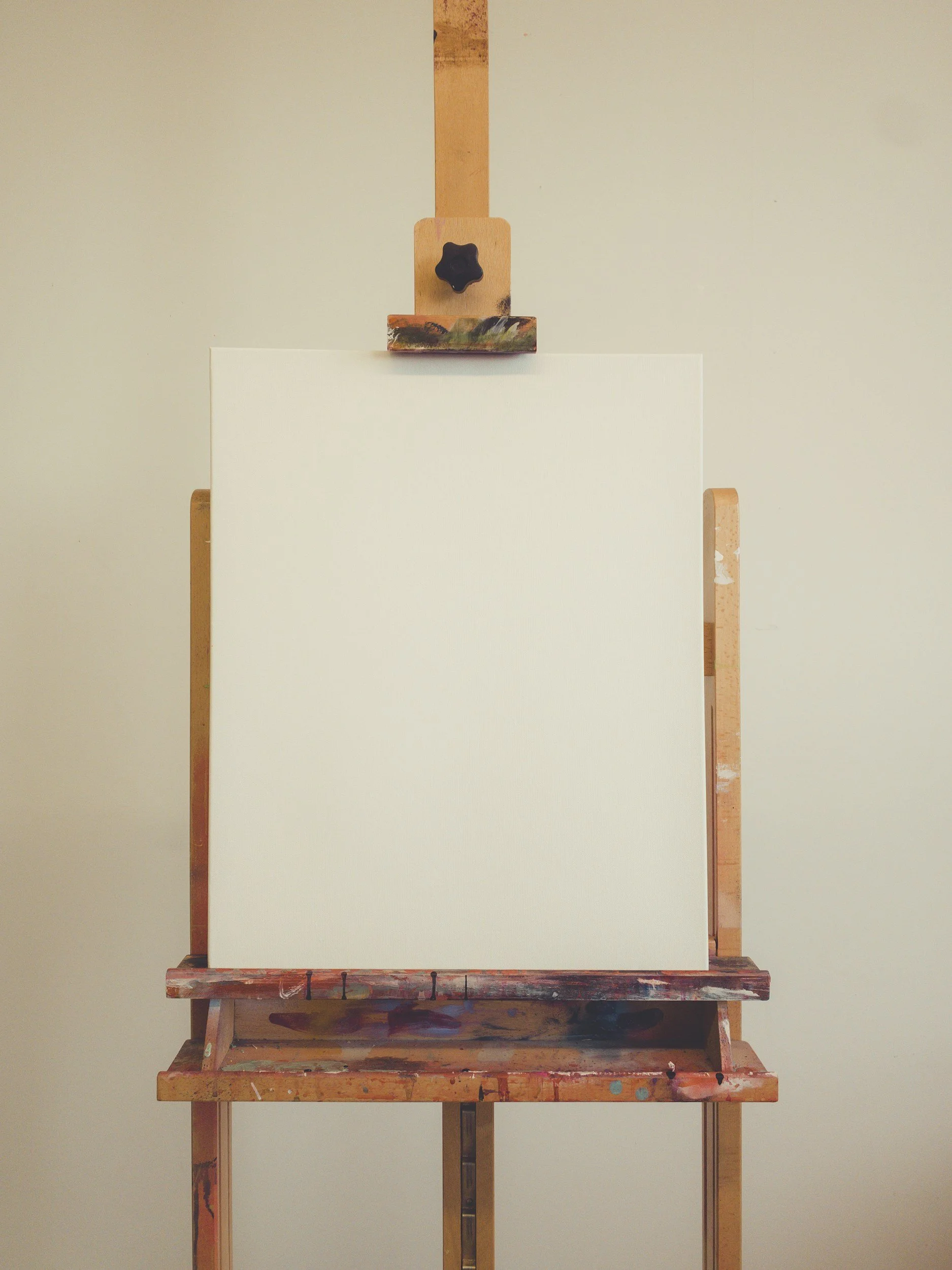
It’s a question I get asked time and time again, often with the gentlest intentions: "Are you painting lately?" "What have you done creative recently?" "Can you paint me something?"
And yet, my walls remain quite bare, and my heart has felt empty in that space for a long while. I think I am only just now starting to be truly open to the possibility of trying to do art again, because I am finally ready to face the underlying question: Where did my art go?
It’s not that I couldn’t face the question before, and it’s not that I was completely incapable of doing art. I would have flashes of inspiration here and there, and I’ve been creative in short spurts. But that deep creative longing and urging—the kind that was a core part of my very existence until the age of 20—slowly filtered out, leaving a quiet void. Living with that absence has caused immense shame, vulnerability, self-blame, and self-judgment. But there is a long history to explore here. For me, and for anybody else who would like to listen, this is the anatomy of what happens when an artist stops arting.
Part 1: Burnout
During my final year of high school (the HSC), I worked incredibly hard on my art portfolio, but I completely floundered. My art teacher was wonderful, but looking back, I realize I needed much more structured direction and far less open-ended exploration. My final body of work turned out to be a flop. Years later, when we were cleaning out my childhood house to sell it, I threw the entire project out. While I feel a twinge of regret for discarding it completely, in truth, it felt quite healing at the time to just be done with it.
Part 2: Failure
Following high school, I went to the College of Fine Arts (COFA). While I genuinely enjoyed the experience, I found myself floundering yet again. I scored quite highly on my research and education components, and I was wildly inconsistent—sometimes I completely wowed my instructors, and other times they had absolutely no idea what I was doing. To make matters more difficult, the curriculum offered virtually no technical instruction, which was exactly what would have benefited my learning style. I barely passed.
Part 3: Play
Leaving Australia allowed me to step away from the pressure of the canvas and entertain another fundamental part of myself: my helping self. I shifted into education and became a preschool teacher. In that environment, I excelled because I was finally allowed to do very childlike, spontaneous, and playful creative activities. However, I was living in a small apartment shared with three roommates, meaning I had zero space to spread out and create my own work. Combined with the lingering burnout from my academic art failures, the brush stayed down.
Part 4: Self Protection
My late 20s became a major turning point. I think something deep within my psyche developed a profound fear of art. I didn't feel good enough, and I was simultaneously focused on too many moving parts. In an already overwhelming world, art felt like just another massive thing I needed to manage, and because it carried so much emotional weight, it was the easiest thing to cut out. Over the years, I tried to bring it back at times, but never successfully for long periods.
Part 5: Integration
Eventually, I pursued an art therapy degree. For me, this wasn't about building a commercial portfolio; it was a deeply personal degree designed to help support my own understanding of what I had been through. It was incredibly useful in that regard. It allowed me to be somewhat playful with materials again, and opened up some curiosity for me, but still didn’t relax my fears of being a failure. In some ways, it reinforced the fact that I can do it to help others, but can’t do it to help myself.
Part 6: Possible curiosity
So why now? I’m not entirely sure why art has been taking up so much space in my mind lately. Perhaps it’s that I am finally being able to be curious as to why its easier to help others than it is to help myself. Perhaps it is a byproduct of seeing so many beautiful processes shared online, or perhaps it's a quiet realization that with the right technical support, what seems scary may not be as scary as I think it is.
The landscape is completely different now than it was 20 years ago. There are so many digital supports, apps, structured tutorials, and accessible mediums available today that lower the barrier to entry; tools I could have only dreamed of when I was struggling in art school.
Yet, even with these tools, I am still quite nervous. The old resistance is incredibly strong: How do I maintain consistency? What do I even paint? Will my lack of technical skills just lead to another flop?
Breaking it down like this helps. Acknowledging the shame and tracing the timeline makes the fear feel a little smaller. I don't have the answers yet, and I haven't picked up a brush today. But for the first time in a decade and a half, I am looking at the blank canvas not with a desire to run, but with a tentative curiosity about what might happen if I just allow myself to begin again.
